
Short answer
A collapsible rigid box is made in four steps: prepare the board, make the wrapped outer case, wrap the folding side wings, and assemble wings and case. The assembly machine sets the pace: the HF-1150 runs 15–20 pieces per minute, up to about 9,600 per 8-hour shift.
Updated · figures from the HORFON specification sheets
On this page · 10
- Why a collapsible rigid box needs different machines
- The parts of a collapsible rigid box
- The four steps of collapsible box production
- What the HF-1150 assembly machine does
- Collapsible box machines compared
- Balancing the line: cases, wings and assembly
- HF-8020 or HF-800D for the wings?
- Making the case: one machine or two
- Power, air and space for a collapsible box line
- What to send us for a collapsible box line
Why a collapsible rigid box needs different machines
A standard rigid box has four fixed walls. In a collapsible box two of the walls are side wings with triangle plates that fold flat, so the box ships and stores flat and is popped up by the packer. The wings are made separately from the case, wrapped and creased so they hinge, and then glued on. That is three kinds of machine instead of one line.
The parts of a collapsible rigid box
- The outer case: greyboard panels wrapped in cover paper. It forms the base, the back and the lid, and is made like a hardcover book case.
- Two side wings: a narrow middle board with a right-triangle board at each end, wrapped in paper and creased along the lines where it folds inward.
- The closure, usually a magnet in one panel and an iron sheet in the panel it closes against.
The four steps of collapsible box production
- 01
- 02
Make the case
The HF-550 feeds and glues the paper, positions 1 to 6 boards by camera and wraps the four edges, for cases up to 1000 × 500 mm.
- 03
Wrap the side wings
The HF-8020 positions the wing board and the triangle plates to ±0.1 mm, wraps the paper and creases the fold lines.
- 04
Assemble
The HF-1150 feeds the case, sprays glue, places the wings with three vision stations and presses them.
What the HF-1150 assembly machine does
In assembly the two wings have to sit square to the case on both sides, or the box will not stand up straight. The HF-1150 does this in one line: it feeds the finished case, sprays the glue, positions the two side wings by camera, sprays the triangle glue for the wings and presses the parts together.
It takes cases from 400 × 150 mm to 1150 × 500 mm and side boards from 230 × 50 mm to 700 × 150 mm. Three vision stations and two servo mould-adjustment modules work along the line, and positioning is set on screen. It runs 15–20 pieces per minute: up to about 9,600 pieces in an 8-hour shift on case shells 1 m long.
Collapsible box machines compared
| Parameter | 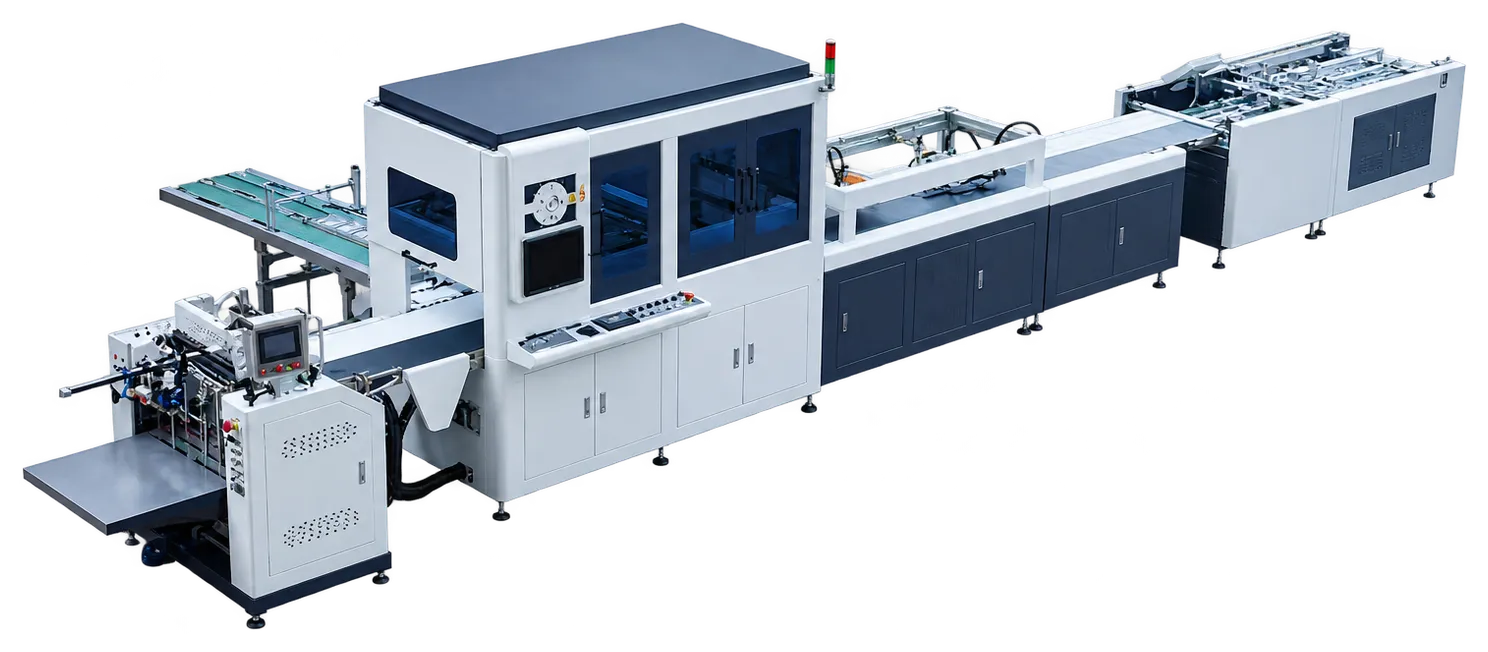 | 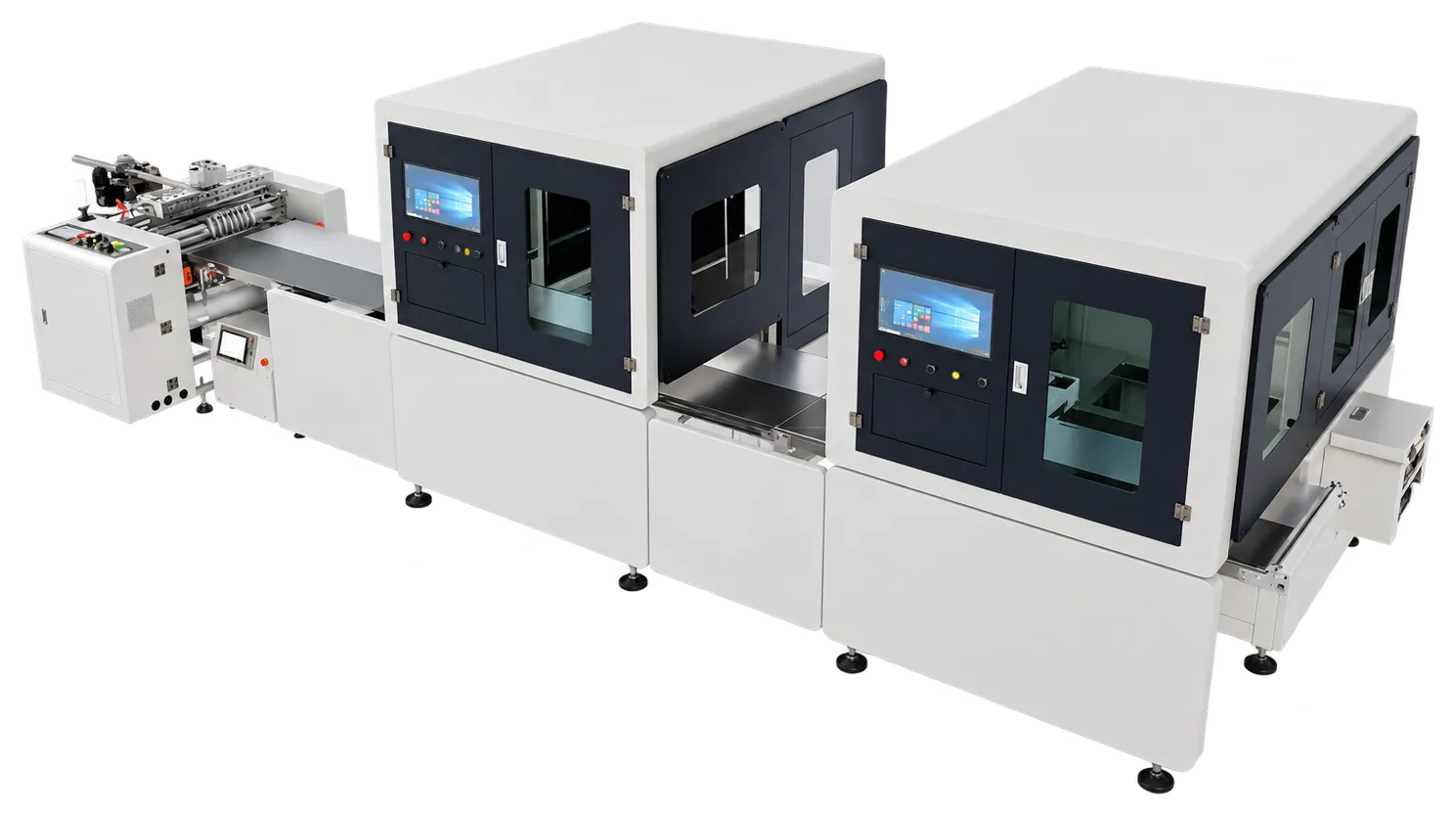 | 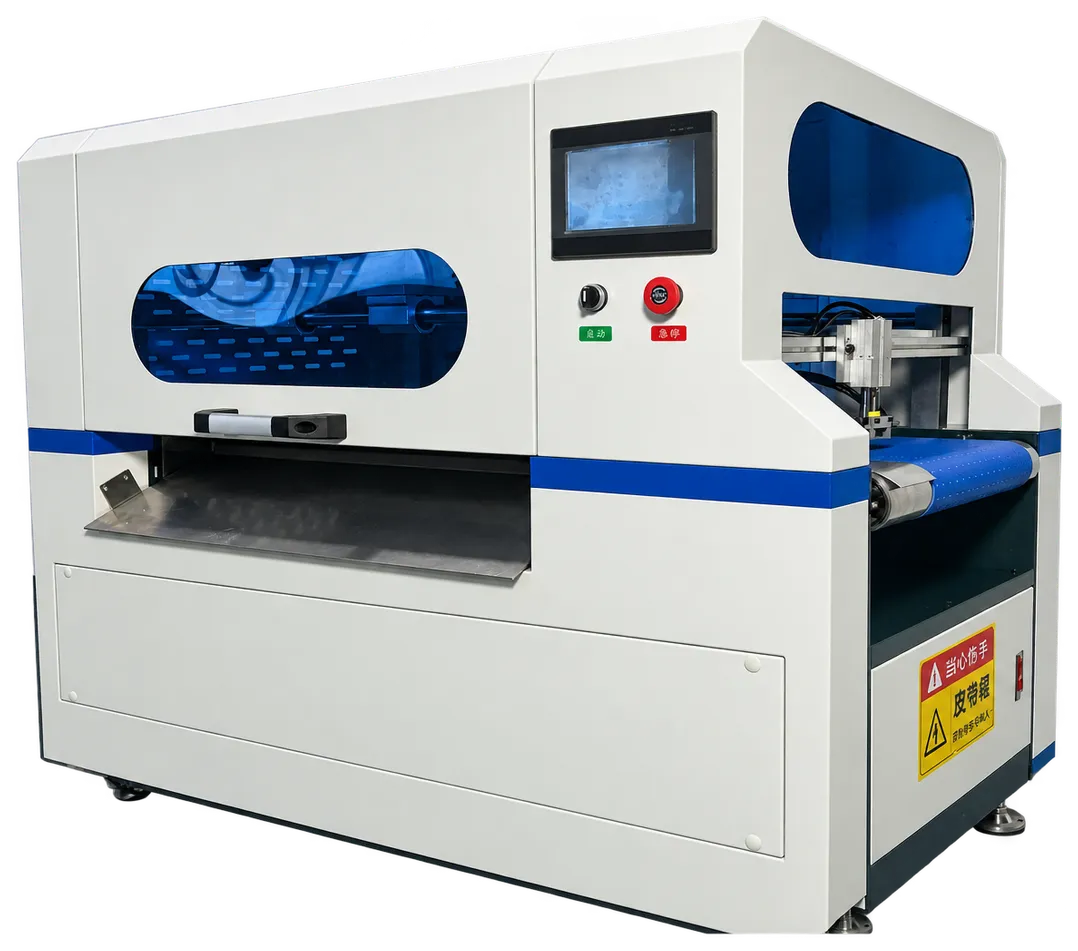 | 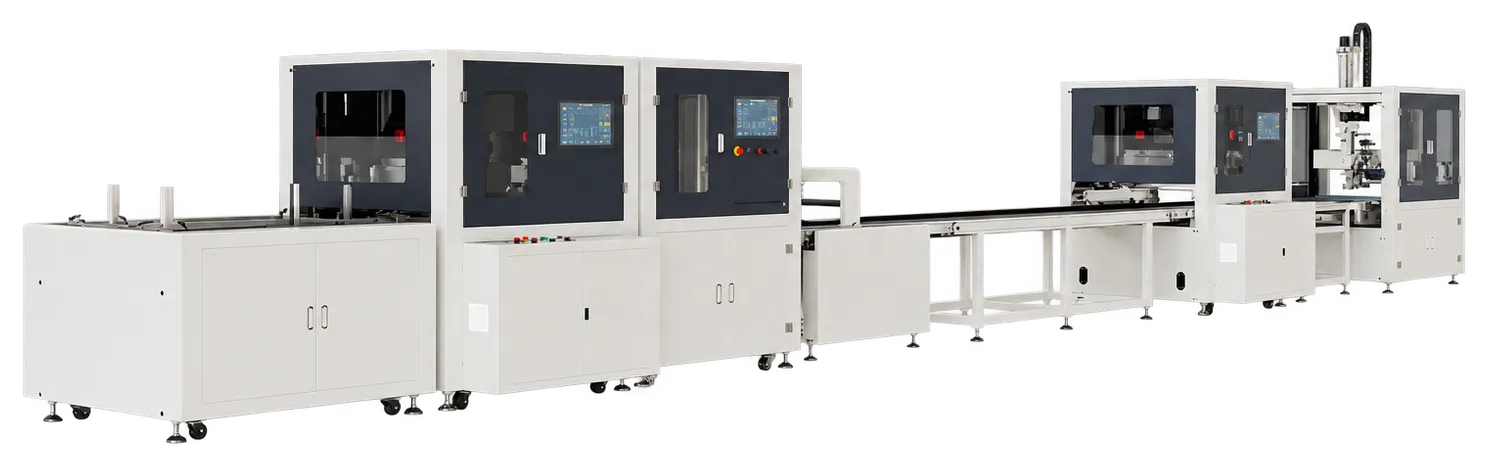 |
|---|---|---|---|---|
| Speed | 20–30 pcs/min | 20–30 sheets/min | 19–25 pcs/min | 15–20 pcs/min |
| Largest job | 1000 × 500 mm | 800 × 200 mm | 800 mm | 1150 × 500 mm |
| Positioning accuracy | ±0.1 mm | ±0.1 mm | — | — |
| Power | 10.5 kW / 380 V, 3-phase | 14 kW | 0.75 kW / 220 V | 23 kW |
| Weight | 3,000 kg | 2,100 kg | 350 kg | 8,200 kg |
Balancing the line: cases, wings and assembly
| Machine | Rated speed | Parts per box | Boxes per minute |
|---|---|---|---|
| HF-550 case maker | 20–30 pcs/min | 1 case | 20–30 |
| HF-8020 wing machine | 20–30 sheets/min | 2 wings | 10–15 |
| HF-800D wing wrapper | 19–25 pcs/min | 2 wings | 9.5–12.5 |
| HF-1150 assembly | 15–20 pcs/min | 1 box | 15–20 |
The case maker is ahead of the assembly machine, and one wing machine is behind it. A plant that wants the HF-1150 at its full 15–20 boxes per minute therefore needs more wing capacity than a single HF-8020 gives: a second wing machine, or wings made ahead and stocked. Wings and cases are flat, so both can be made in batches and stored before assembly.
HF-8020 or HF-800D for the wings?
The HF-8020 is a complete wing line: paper feeding, gluing, camera positioning, wrapping and creasing, 7 m long and 2,100 kg. The HF-800D is a 350 kg machine that wraps the wing only, at 19–25 pcs/min, and suits plants that already position by hand or on a positioning machine.
| HF-8020 | HF-800D | |
|---|---|---|
| What it does | Feeds and glues the paper, positions the boards by camera, wraps and creases | Wraps the wing; positioning is done before it |
| Wing size | Finished wing 160 × 40 mm to 800 × 200 mm | Board width 30–200 mm, paper up to 800 mm long |
| Paper | 100–350 g/m² | 100–300 g/m² |
| Triangle boards | Leg length 40–200 mm, 0.4–1 mm thick | Not stated |
| Power | 380 V, 14 kW motor and 4 kW heater | 220 V, 0.75 kW |
| Footprint | 7.0 × 2.6 m | 1.4 × 0.85 m |
Two features of the HF-8020 remove work elsewhere. It creases the wing in the machine, pasting and grooving two vertical edges and one horizontal edge, which takes out a manual step downstream. And its corner nipping function reduces the need for a cutting die made for each product.
Making the case: one machine or two
The case of a collapsible box is a hardcover case, and there are two ways to make it. The HF-550 does it in one machine. The other route splits the job: the HF-1050 glues the paper and positions the boards, and the HF-900 wraps the four edges. Both run up to 30 pieces per minute. The differences are set out in case maker vs positioning and wrapping machines.
Power, air and space for a collapsible box line
The three automatic machines all need 380 V and compressed air. The HF-1150 is the heavy one, at 23 kW and 8,200 kg, so check the floor loading and the route into the building. The HF-550 is 10.5 m long and the HF-8020 7 m. Ask for the layout drawing of the HF-1150 with the quotation.
What to send us for a collapsible box line
- The size of the case laid flat, length × width, for your largest and smallest box.
- The size of the side wing, and the size of its triangle boards.
- Greyboard thickness and the cover paper and its weight.
- Whether the box has magnets, and any special shape.
- The output you need per day, and the machines you already have.
Machines in this guide
Common questions
How many collapsible boxes can the HF-1150 assemble per shift?
The HF-1150 runs 15–20 pieces per minute, which is up to about 9,600 pieces in an 8-hour shift on case shells 1 m long.
What size of collapsible box can the HF-1150 assemble?
Cases from 400 × 150 mm to 1150 × 500 mm, with side greyboard from 230 × 50 mm to 700 × 150 mm.
Is one wing machine enough for one assembly machine?
Not at full speed. A box needs two wings, so an HF-8020 running 20–30 sheets per minute supplies wings for 10 to 15 boxes per minute, against 15–20 on the HF-1150. The gap is closed with a second wing machine or by making wings ahead.
What is the difference between the HF-8020 and the HF-800D?
The HF-8020 is a full line that glues the paper, positions the wing board and triangle plates by camera to ±0.1 mm, wraps and creases, at 20–30 sheets/min. The HF-800D only wraps the wing, at 19–25 pcs/min, and is used after hand positioning or a positioning machine.
Which machine makes the outer case of a collapsible box?
The HF-550 case maker, which glues, positions 1 to 6 boards by camera and wraps four edges at 20–30 pcs/min for cases up to 1000 × 500 mm. The alternative is the HF-1050 positioning line followed by the HF-900 four-side wrapping machine.
Can the HF-1150 handle special-shaped folding boxes?
It is built to keep special-shaped folding boxes stable through assembly, and its servo mould adjustment shortens the changeover between sizes. Send a drawing or a sample of the box so the shape can be checked.